A Routine for a Day Away from Home
A day-away-from-home routine helps you pack familiar personal-care essentials, skip products without a clear job, and get ready without a crowded bag.
The common mistake in a day-away-from-home routine is packing for every version of yourself: the weather may change, plans may run late, and a mirror may appear at an inconvenient moment. The cost is a crowded bag and a string of unfamiliar choices when you meant to keep the day simple. A better plan starts with the personal-care habits you already use and gives each item a clear job.
This is not a miniature version of your bathroom shelf. It is a short sequence for a particular day: before you leave, while you are out, and when you get home. Think in terms of comfort and practical needs, not a fresh look for every possible situation.
What does your usual routine already do?
Start by noticing what you actually reach for on an ordinary day. If you wash your face, use a familiar moisturizer, and apply sunscreen before heading out, those are possible anchors. If you rarely wear makeup, a day away does not create a reason to pack it. If you usually carry lip balm, it may earn a place because you already use it, not because a bag feels incomplete without it.
For each habit, ask what job it serves away from home. Does it help you feel comfortable, meet a specific personal-care need, or support an activity planned for the day? If you cannot name a job, leave it at home. This simple test is more useful than building a kit from a generic list, because the same item can be essential for one person and needless for another.
Consider the day’s setting, too. A desk-based outing, a long walk, and an overnight visit place different demands on a routine. You do not need to forecast every inconvenience. Make room for the needs you can reasonably see coming, then let the rest stay uncertain.
What belongs in a small day bag?
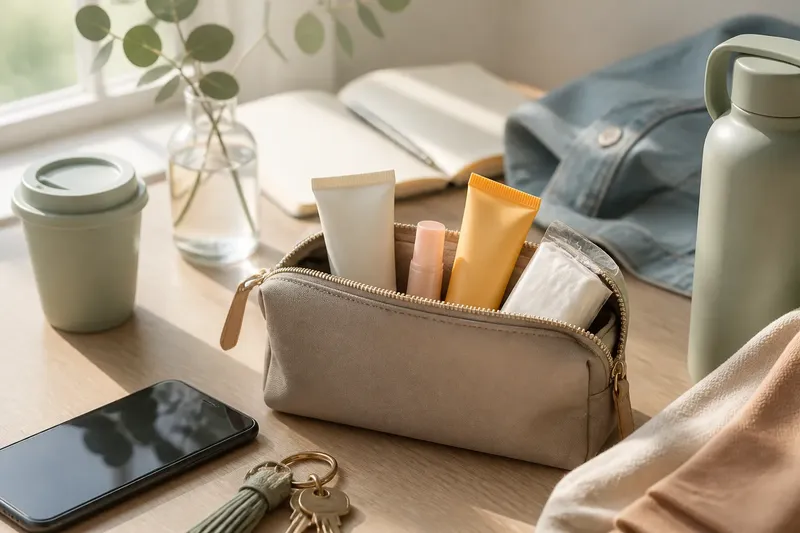
Choose the few familiar steps that matter for the day, then consider the practical items that keep them usable. A small pouch can prevent a tube or balm from vanishing among keys and receipts, but the pouch should fit the routine rather than invite extra products. A clean, secure container is useful only if it is suitable for the product and easy to identify.
- Core care: Bring a familiar moisturizer or lip balm if you expect to use it. Skip duplicates that do the same job.
- Sun protection: If sun exposure is part of the day, pack the sunscreen you normally use and plan to follow its label for application and reapplication.
- Makeup, if it is part of your habit: Pick only the item or items you would realistically touch up. A compact mirror can help if you already use one.
- Hygiene: Add a tissue or a small hand-cleaning product if your route or plans make it useful. Keep it separate from products that could leak.
- Personal needs: Include items tied to a predictable part of your day, such as a hair tie or a product you use after a meal. Do not pack a full backup routine for a small possibility.
Let the day’s actual activities settle close calls. A meal outdoors may make sun protection more relevant; a quick trip between indoor stops may not call for the same set of touch-up items as a day spent outside. When product directions or local requirements matter, follow the label, manufacturer instructions, or applicable rules.
Say you usually use moisturizer and lip balm, and you will spend the afternoon moving between a library and a café. You could pack those two familiar products, a tissue, and a pouch that keeps them from rubbing against your phone. The observable result you would expect is a bag with the items you know you use, rather than a collection of extras chosen for situations that may never arise.
How should the routine change through the day?
Before leaving: Follow your usual morning sequence rather than saving every step for later. Wash or refresh your face in the way you normally do, apply familiar products you intend to use, and check that the items packed for later are closed and easy to reach. If you wear makeup, apply it as you usually would; there is no need to add a new layer simply because you will be away from home.
Before the first change of setting: Pause briefly to notice whether the day has changed. If you have moved outdoors or your plans now include more time in the sun, use the sun-protection product according to its directions. If nothing calls for a touch-up, keep moving. A routine should respond to the day, not create another appointment with your reflection.
At a natural break: A meal, a restroom stop, or a quiet pause can be a convenient moment to check whether you want lip balm, need a tissue, or have a personal-care task to handle. Keep the check brief. Avoid repeatedly adding product just to restore an imagined version of how you looked when you left.
When you get home: Put reusable items back where they belong, discard disposable waste, and clean or refresh anything that needs it according to its directions. Notice what stayed untouched. That observation can help edit the next day’s pouch, but it does not mean the item was foolish to carry; plans can change. The aim is a routine that reflects your real use over time.
What if plans change after you leave?
Build flexibility into the decision, not into the amount you carry. If the day extends, use a nearby restroom or a familiar shop only when a genuine need arises. You do not need to pack a second cleanser, multiple complexion products, or a full set of tools in anticipation of every possible change. If an overnight stay becomes likely, treat it as a different packing decision rather than forcing a day pouch to do two jobs.
For unexpected weather, consider what changed and what the product is meant to do. Wind, heat, rain, or dry indoor air may affect comfort, but that does not make every product suitable for every condition. Use items you recognize and follow their directions; if you do not have something relevant, you can choose a simple alternative such as seeking shade or adjusting your plans when practical.
There is also no obligation to correct every visible change. A little shine, a softened lip color, or a few strands out of place may be ordinary effects of spending time out. Decide whether a touch-up would make you more comfortable, then act on that preference rather than treating every change as a problem that demands a product.
Which small questions help you edit the plan?
How many products should I bring for a day out?
Bring the few products connected to habits you expect to use and needs you can anticipate. A useful routine may fit into a small pouch, but the right amount depends on your plans and personal care needs, not a fixed count.
Should I pack a product I have not used before?
A day away is a poor time to depend on an unfamiliar product, especially if you do not know how it feels or how it fits your routine. If you want to try something new, choose a setting where you can follow its directions and stop using it if it causes discomfort.
What can I leave out of a day bag?
Leave out products with no clear job, duplicates, and items you rarely use even at home. If a product is only there because you feel a bag ought to contain it, that is a good reason to reconsider.
How can I keep a routine useful without constant touch-ups?
Set a few natural moments for checking in, such as before going outdoors or during a meal break. Between them, let the routine rest unless a real need comes up; frequent mirror checks can turn an easy day into a series of corrections.
How can you make the next day easier?
Keep the pouch where you can see it when you unpack, and make a short mental note of what you used, what you missed, and what never left its pocket. Do not turn that note into a scorecard. The useful question is whether each item earned its space for the kind of day you had.
Then adjust one choice at a time. If you repeatedly reach for lip balm, keep it in the pouch. If a makeup item stays untouched on ordinary outings, leave it home next time and see whether that feels comfortable. Small edits preserve the part that matters most: a routine built from your existing habits, with room for the day to unfold.
A day-away-from-home routine works best when it travels lightly and stays familiar. Pack for the plans you can name, keep a product only when it has a clear job, and let ordinary changes to your appearance remain ordinary. The bag can be ready without carrying every possibility inside it.