From Powder Puffs to Compact Cases: Beauty Tools on the Move
Trace how powder puffs and compact cases addressed the practical problems of carrying and using cosmetics, and learn what their designs can—and cannot—reveal.
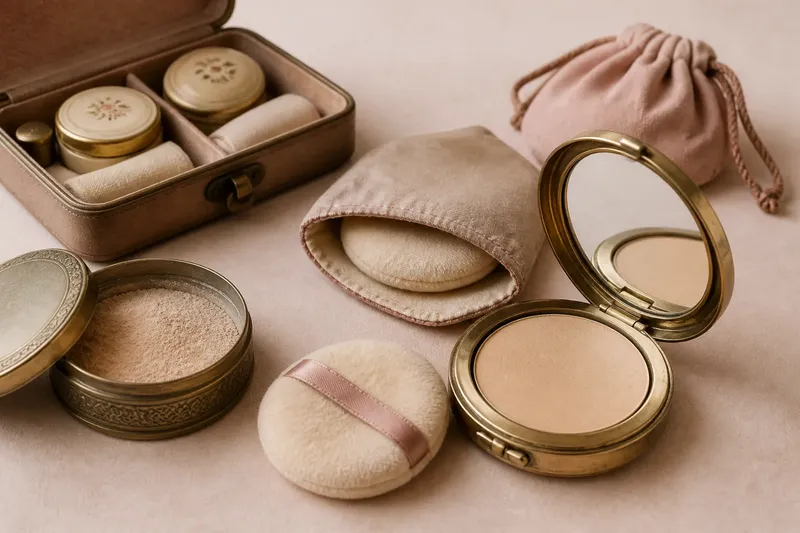
The common mistake in reading an old compact is to treat it as a tiny vanity with the furniture removed. That overlooks its everyday tradeoffs: a puff could collect lint, a mirror could crack, and loose powder could escape into a bag. The history of portable makeup tools is not one universal story of changing habits; individual objects show how designers addressed particular problems of carrying and applying cosmetics.
Powder puffs, boxes, and compact cases each paired materials and mechanisms in different ways. Their hinges, lids, compartments, and surfaces can suggest intended uses, but an object alone rarely tells us who carried it, where it went, or how often it was opened. Reading the design carefully means separating visible evidence from plausible interpretation.
What can a powder puff tell us about carrying makeup?
A powder puff is an applicator, but its soft face also picks up whatever it touches. A ribbon or finger loop can help a hand hold and control it; a cover or sleeve can keep its working surface apart from other belongings. These features point to practical concerns, not a complete account of anyone’s routine.
Some arrangements used several objects: a powder container, a separate puff, and perhaps a mirror or cloth. That offered flexibility, but each loose piece needed a place. A fitted compartment could keep items together, while a pouch was easier to carry but offered less protection from crushing or spills.
A shallow space may have been intended for an applicator, especially if its shape and dimensions fit one. Wear around a lid can be consistent with repeated opening. Neither clue identifies an owner or setting, and wear can have more than one cause. Treat such features as evidence about possible use, not as a personal history.
Which portable arrangement addressed which problem?
It is more useful to compare objects by the task their design could support than to arrange them as stages in a simple march toward smaller, better tools. A powder box, travel case, compact, and pouch each made different compromises.
- Powder box: If a container has a broad opening and no built-in mirror, it may suit use near a table; if portability is the concern, consider whether a separate applicator and lid would be needed.
- Fitted travel case: If compartments match several containers and an applicator, the case can keep those pieces together; if the contents are irregularly shaped, a loose pouch or separate containers may fit better.
- Compact with mirror: If a lid holds a mirror above a powder well, the design brings viewing and cosmetic storage together; if there is little room for an applicator, the user may need to carry one separately.
- Applicator pouch or sleeve: If the fabric separates a puff from other belongings, it can reduce contact with lint; if protection from pressure or spills matters more, a firm case may be a better fit.
- Separate mirror and powder container: If each item has its own protective cover, the arrangement allows flexible placement; if keeping track of several pieces is inconvenient, a combined case may be preferable.
- Decorated exterior, plain interior: If ornament appears only on the outside, it may have served a visual or social purpose while the interior handled the cosmetic; if the object’s function is unclear, examine the compartments and closures before inferring use from decoration.
Imagine a traveler whose powder box arrives with lint on the separate puff. The starting problem is contact with other belongings, not a lack of reflection. A fitted sleeve or covered compartment could separate the puff from loose items; the observable result would be a protected applicator. Adding a mirror would address a different need, so the traveler would have to weigh extra convenience against carrying another component.
How did a compact case bring tools together?
A compact could join a cosmetic container and mirror that might otherwise travel separately. A hinged lid could protect the contents, and an interior mirror could make it possible to check an application without finding a larger reflective surface. The design made a touch-up more self-contained, though it did not make every cosmetic or setting equally convenient.
The hinge and clasp matter alongside the mirror. A lid that stays open can leave a hand free; a loose lid may be awkward to hold. A powder well and a space for a puff support different arrangements, while a clasp keeps the case shut in transit. These features suggest how a case was meant to function, but they cannot establish how consistently someone used it.
A compact’s polished exterior and working interior can tell different stories. Decoration may have made the object suitable as a personal accessory, while the inner compartments had to contend with powder and repeated handling. Without a specific object, place, or period to anchor the claim, it is safer to describe these as possible functions than to claim that compact cases changed makeup habits everywhere.
What do materials and mechanisms suggest about use?
Materials shape both handling and vulnerability. A metal shell can provide a firm barrier but may dent or tarnish. A glass mirror offers a reflective surface but can break. Fabric is pliable and easy to carry, yet it lacks the firm protection of a rigid case. None is simply the superior choice; each answers a different carrying need.
Look at how the parts meet. A raised rim may help contain loose powder. A separate cover might keep a puff from resting directly on it. A hinge, clasp, or sliding lid shows how the object opens, while repairs or replacement parts may complicate interpretation. A mirror that does not fit its frame, for instance, could be a later replacement rather than evidence of the original design.
For a fragile household object, avoid casual cleaning or repair based on guesswork. A soft cloth can still abrade a delicate finish. If the object’s materials or conservation needs are uncertain, ask a qualified museum conservator or follow the guidance of the collection that holds it.
What questions help identify a portable makeup tool?
Why might a powder puff have traveled separately?
A separate puff could be stored apart from powder or replaced without changing the container. The tradeoff was carrying and protecting another loose item.
How is a compact different from a powder box?
A compact commonly combines a portable cosmetic container with a mirror and may include space for an applicator. A powder box can hold cosmetic without those features, so its shape alone does not establish that it was designed for touch-ups away from a table.
What clues suggest a case held a puff?
A shallow compartment that fits an applicator, a retaining feature, or wear consistent with repeated placement may support that interpretation. No single clue proves the original use, especially if the case has been altered or its contents replaced.
Did a small mirror make makeup application private?
A mirror made it possible to check one’s appearance without locating a larger one, but it did not create privacy by itself. The setting and social expectations shaped where someone might choose to open a case.
How should you read a compact as material evidence?
Begin with what you can see: what the object holds, how it closes, and which components touch. Then distinguish that evidence from interpretation. A mirror above a powder well makes a self-contained touch-up plausible; a separate box and puff indicate that carrying and applying could involve distinct objects. Neither arrangement, on its own, proves a wider change in beauty habits.
That distinction is useful when exploring the history of powder puffs and compact cases. Their compartments and closures reveal practical design choices, while their owners’ routines often remain unknown. Notice the space left for a finger, puff, or mirror—and treat each detail as a clue to possible use, not a complete story.